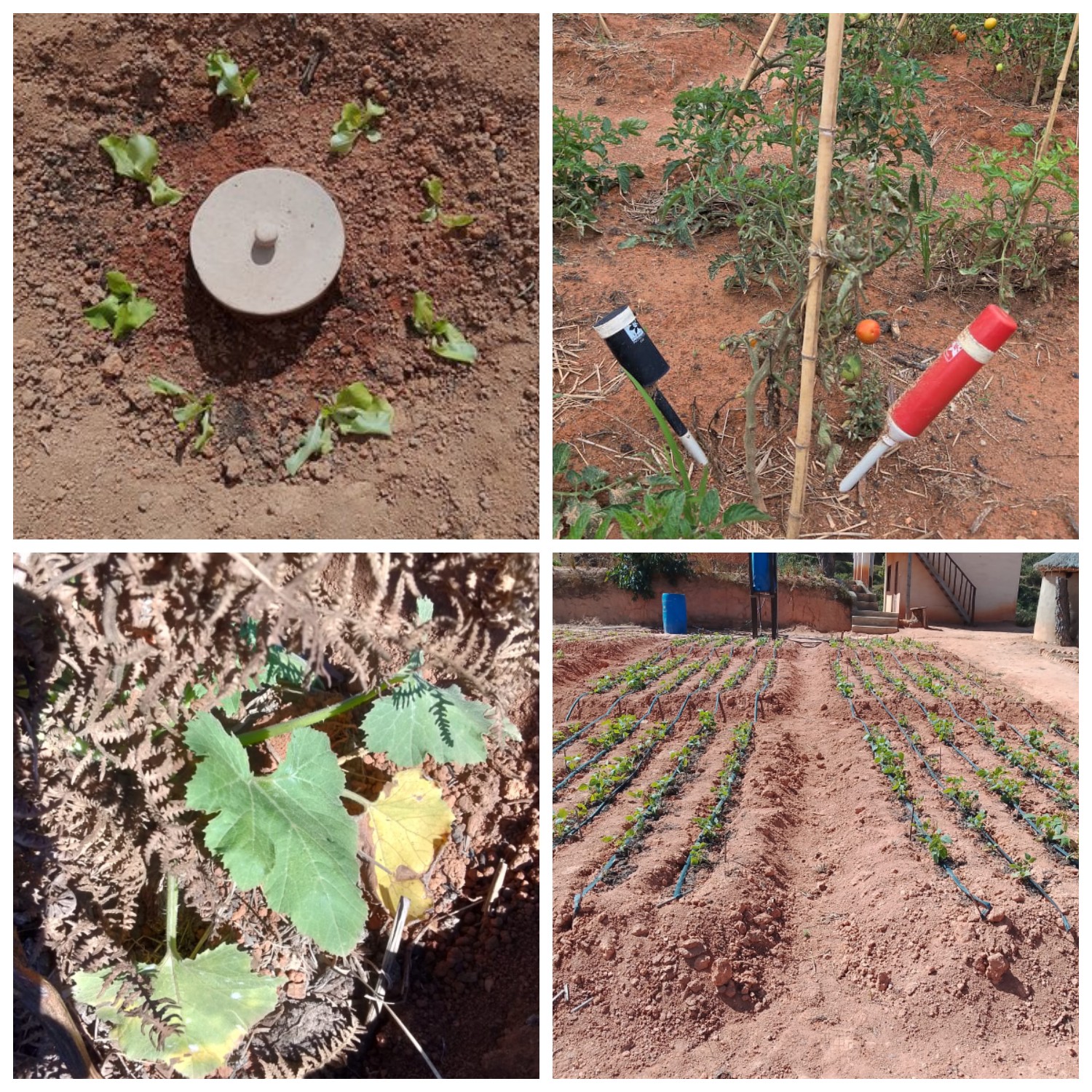
Some water management systems.
Climate change is no longer a distant threat; it has become a reality that is profoundly reshaping our environment and agricultural production systems. In Sub-Saharan Africa, this reality is reflected in rising temperatures, declining rainfall, and increasingly erratic rainy seasons. These changes directly affect agriculture, the largest consumer of freshwater and a cornerstone of food security. Under these conditions, producing more with less water is no longer an option but a necessity. Among
13 Jul 2026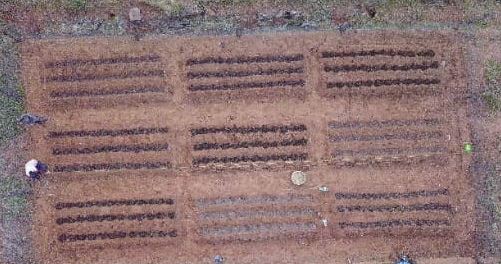
Comparison of organic fertilizers on potatoes (Solanum tuberosum L.) — Ankazondrano, Amoron'i Mania
This study compares the effect of three organic fertilizers — poultry manure (T1), cattle manure (T2), and compost (T3) — on potato (Solanum tuberosum L. var. bandy akama) at Ankazondrano (Amoron'i Mania region). Conducted in a randomized block design on ferralitic soil with minimal irrigation (10 L/m²/week), the trial assessed tuber number, weight, and diameter per plant. Poultry manure (T1) proved the best-performing fertilizer, yielding 9.75 tubers per plant, an average weight of 22.16 g, an
15 Jun 2026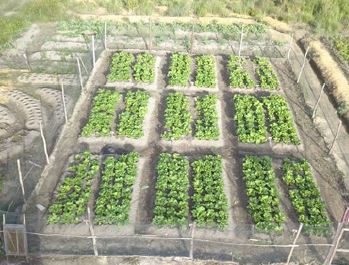
Valorization of coal waste on the petsaï (Brassica rapa var. chinensis) — Alaotra-Mangoro
This study evaluates the effect of wood charcoal residues, alone or combined with cattle manure, on the growth and yield of petsai (Brassica rapa var. chinensis) in the Alaotra-Mangoro region. Three treatments were compared in a randomized block design: T1 = cattle manure alone (10 t/ha), T2 = cattle manure + charcoal residues (5 t/ha), T3 = charcoal residues alone (5 t/ha), with irrigation at 30 L/m²/week. Treatment T2 (manure + charcoal residues) produced the highest aerial biomass (916 g/pla
15 Jun 2026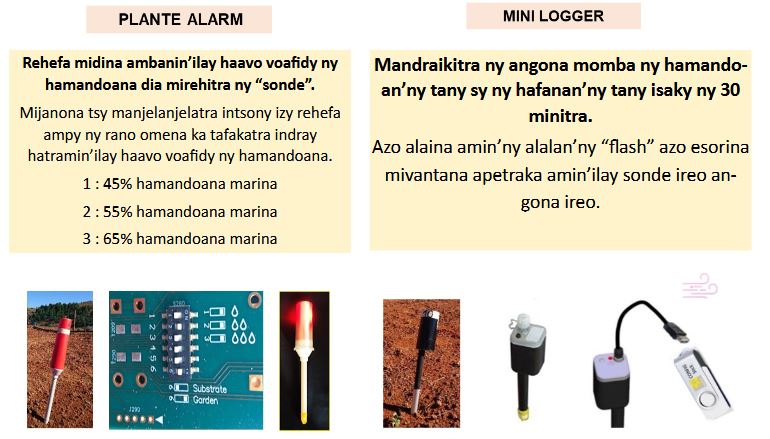
Plant-alarm and mini-logger tools
The mini-logger and plant alarm are two complementary devices that allow for precise soil moisture management and monitoring of crop water requirements. During field placement, the plant alarm is configured according to the desired moisture threshold at which the alarm is triggered. Three values are available: 45%, 55%, and 65% of the actual soil moisture level. The mini-logger, on the other hand, collects soil moisture and temperature data throughout the growing season using integrated storage,
15 Jun 2026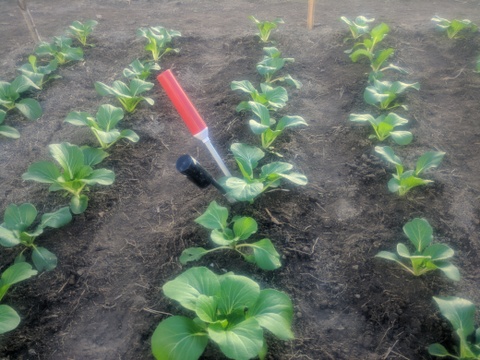
MIP's priority research from its creation until 2025
Research was conducted from 2024 to March 2025 by MIP (also known as MAD24) on minimal irrigation in Madagascar, with the goal of improving agricultural resilience to cope face with climate change and water scarcity. This work resulted from a collaboration between FTA, Aqua Alimenta Switzerland, and ESSA-ABC, with strong involvement from local farmers and student researchers. Four crops were studied: bok choy, carrot, green bean, and watermelon. The trials compared three irrigation regimes: tra
12 Jun 2026
Report on the meeting on agricultural research with and for farmers
Two interactive days allowed key development stakeholders: researchers, farmers, technicians, and policymakers to discuss solutions tailored to local realities. This meeting highlighted the importance of including farmers in research and, especially, in dissemination efforts to observe their tangible impact on the ground.
11 Jun 2026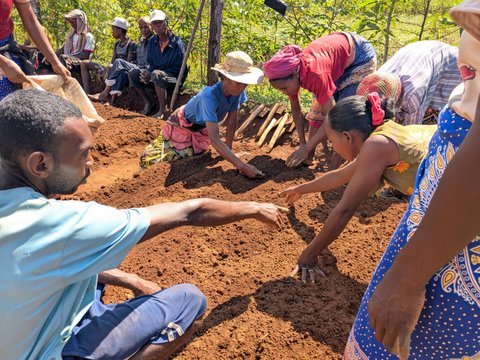
When the protocol encounters the limitations of the field: Capitalizing on experiences from the MIP (2024-2025)
Five concrete cases where research protocols were disrupted by unforeseen field conditions, across the regions of Analamanga, Alaotra Mangoro, and Amoron'i Mania. Root causes identified include untested prior hypotheses (4 out of 5 cases), underestimated external risks — technical or climatic (3 out of 5) — and assumed input quality without prior verification (2 out of 5). In response, the team adjusted its methodologies, documented failures as scientific results, and introduced a mandatory pre
8 Jun 2026
Purpose and objectives of the Minimal Irrigation Project
The Minimal Irrigation Project (MIP), led by FTA (Farming and Technology for Africa), is an agroecological initiative in Madagascar addressing the growing water crisis and food insecurity. By combining minimal irrigation techniques (rainwater harvesting, micro-irrigation), participatory research, and the valorisation of local knowledge, the project co-builds locally adapted solutions with farming communities. Its multi-stakeholder approach brings together farmers, researchers, technicians, and
8 Jun 2026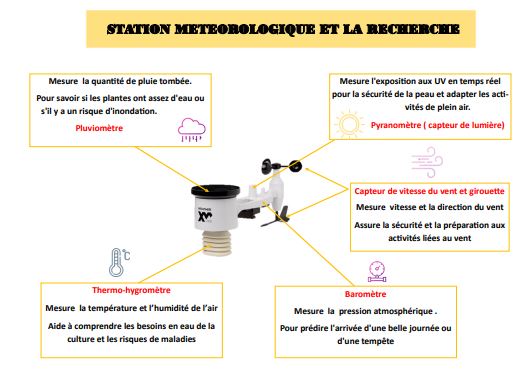
Seasonal climate report over 7 months (October 2025 to April 2026) from the Talatavolonondry weather station
Monitoring climate parameters is crucial in agriculture. Climate parameters greatly influence agronomic parameters. Regular monitoring of these parameters aids in decision-making; for example, the timing of a pesticide treatment is influenced by wind speed, as strong winds are not conducive to pesticide application. Weather data provides insight into the local climate and allows for crop adaptation to these conditions. This is why we place particular emphasis on monitoring local climate data at
5 Jun 2026